
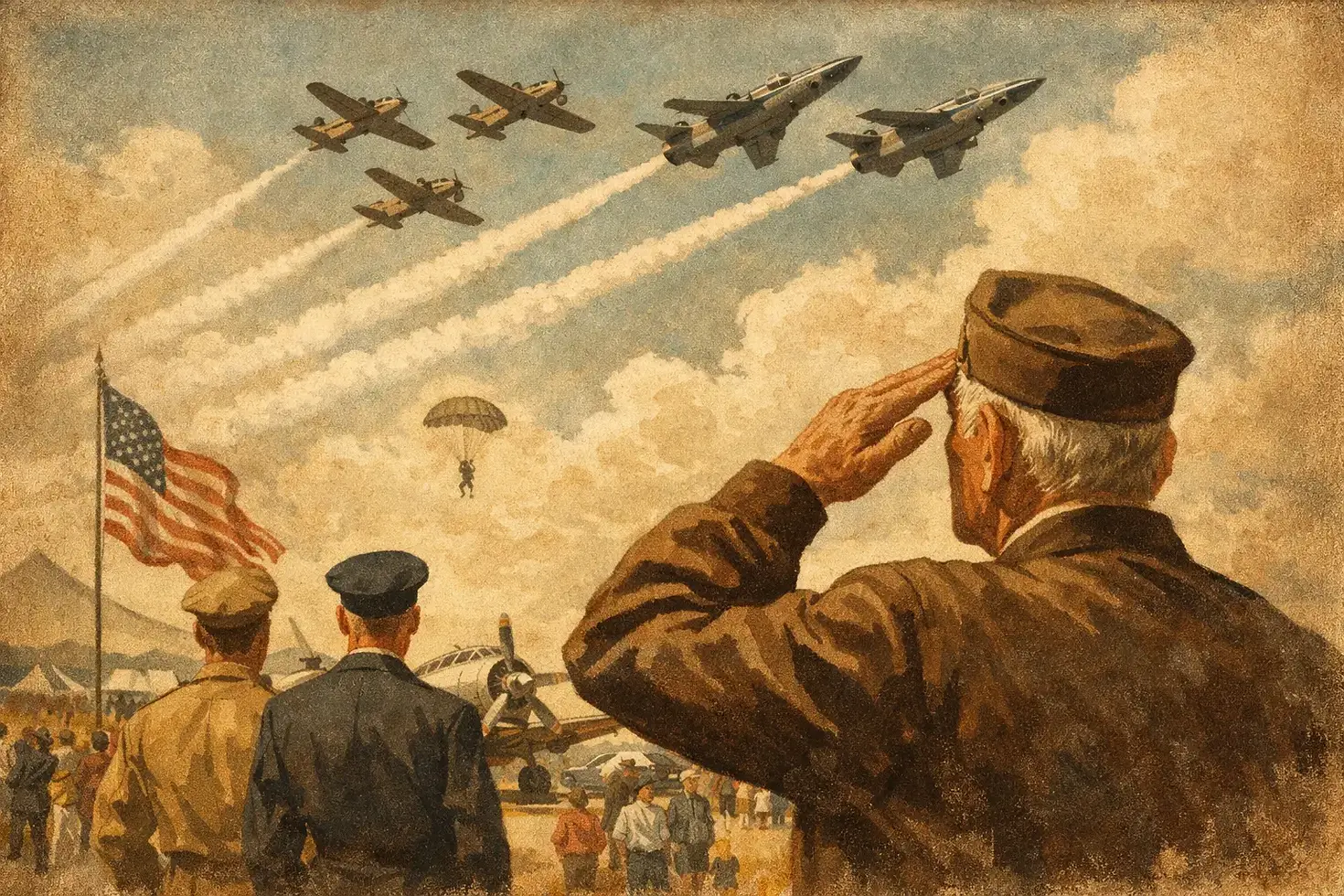
How Airshows Honor Veterans in Real Ways
The moment a warbird roars overhead, the crowd feels it in their chest. But the best answer to how airshows honor veterans is not just noise, speed, or spectacle. It is the way an airshow turns a public event into a shared act of respect, where service is remembered out loud and veterans are recognized in front of the very communities they helped protect.
That matters because veterans do not need hollow applause. They deserve visible gratitude, meaningful recognition, and spaces where their stories are treated with dignity. A well-produced airshow can do all three at once. It brings together aircraft history, military tradition, hometown pride, and family memories in a way that feels immediate, emotional, and real.
How airshows honor veterans beyond the flyby
Most people first think of ceremonial flyovers, and for good reason. A formation pass, a missing man tribute, or the sound of a historic military aircraft overhead can stop a crowd cold. Those moments carry weight because aviation has always been tied to service, sacrifice, and national defense. Watching those aircraft in motion is not just entertaining. It connects the present-day audience to the people who flew, maintained, supported, and defended with them.
Still, the strongest veteran tributes at airshows go much further than a pass in the sky. They create a full environment of recognition. A veteran may be introduced by name, branch, or era of service. Families may hear a public thank-you that acknowledges not just military duty, but the cost that service can carry over a lifetime. When done well, those moments feel personal, not performative.
That difference is everything. A generic salute can be polite. A specific one can be unforgettable.
The power of ceremony at a community airshow
Airshows work especially well as veteran tribute events because they blend excitement with ceremony. One minute, children are staring up at precision flying. The next, the crowd is standing for the national anthem, a color guard presentation, or a formal veteran recognition segment. That contrast is powerful. It reminds people that the thrill of aviation and the history of military service are deeply connected.
Ceremony also gives structure to gratitude. Instead of leaving appreciation vague, it puts it into recognizable moments - opening remarks, flag presentations, branch recognition, memorial acknowledgments, and tribute flights. These traditions help audiences participate. People are not just watching a show. They are joining a public expression of respect.
For veterans in attendance, that can mean more than many civilians realize. Some enjoy the pride of being recognized. Others appreciate simply being among people who understand that service deserves a place of honor. Not every veteran wants the spotlight, and good events recognize that too. The goal is not to force emotion. It is to create an atmosphere where respect is clear and sincere.
Aircraft tell the story in a way words cannot
One reason airshows remain such a strong setting for honoring veterans is that the aircraft themselves carry memory. A vintage trainer, a warbird, a helicopter, or a restored military plane is not just a machine on display. It is a living piece of history. For some veterans, it brings back pride. For others, it stirs grief, nostalgia, or remembrance. It depends on their service, their era, and their personal experience.
That is why presentation matters. Aircraft should not be treated like props in a theme park version of history. They should be framed with context. When announcers explain what an aircraft did, who flew it, what missions it supported, or how it changed aviation history, the audience begins to understand that these displays represent real people and real sacrifice.
Families feel that too. A child may come for the speed and smoke, but leave with a new respect for military service because a parent or grandparent used the event to tell a story. That is one of the quiet strengths of airshows. They create natural openings for one generation to pass history to the next.
Why public recognition still matters
Veterans are often thanked privately, but public recognition carries a different kind of weight. It says the community sees their service and values it openly. In a time when people are pulled in a hundred directions, that kind of focused acknowledgment stands out.
An airshow is a particularly strong venue for that recognition because it draws a broad cross-section of the community. Families, aviation fans, local businesses, civic leaders, car enthusiasts, and military supporters all gather in one place. When veterans are honored in that setting, the tribute is not tucked away. It becomes part of the public identity of the day.
That matters in hometown settings. In a city like Gainesville, a veteran tribute at an airshow can feel deeply local. It is not just about national service in the abstract. It is about neighbors honoring neighbors. The person being recognized may have coached Little League, run a local business, served in church, or raised a family right there in the community. That local connection makes the appreciation hit harder.
How airshows honor veterans through experience, not just announcements
The strongest tributes are woven into the full event experience. Veteran parking, reserved seating, discounted access, hospitality areas, and meet-and-greet opportunities may sound like simple logistics, but they send a clear message. They say veterans are not an afterthought. They are central to the event.
Interactive experiences can deepen that feeling. Walking through a historic aircraft display, speaking with pilots, meeting fellow veterans, or sharing a story with younger attendees gives the day more meaning than a brief shout-out from the stage. For some veterans, these conversations are the best part. Recognition is valuable, but connection is what stays with people.
There is also something special about events that balance tribute with joy. Veterans should not only be remembered for hardship. They should also be celebrated. Great airshows understand that honoring service can look like smiles, family photos, reunions, music, and the kind of shared excitement that makes a day memorable. Respect does not have to be quiet to be genuine.
That is part of what makes a community event like The Pixel Man Airshow so compelling when it gets the balance right. The energy, the aircraft, the family atmosphere, and the veteran-centered moments can all work together to create a day that feels both thrilling and meaningful.
The trade-off: tribute must stay respectful
There is a line every patriotic event has to manage. Airshows are built to entertain, but veteran recognition cannot feel like a marketing add-on squeezed between attractions. If the tone gets too flashy during solemn moments, the tribute loses credibility. If the event leans too formal for too long, it can lose the energy that brings families through the gate in the first place.
The best approach is intentional pacing. Memorial moments should have room to breathe. Announcers should know when to raise the energy and when to lower it. Music, narration, and visual presentation all need to support the message. Excitement is part of the airshow experience, but reverence has its own place.
It also helps to recognize that veterans are not one single audience. A Vietnam veteran, a Gulf War veteran, and a younger post-9/11 veteran may each respond differently to public tribute. Some want ceremony. Some want camaraderie. Some simply want to enjoy the aircraft with family. A thoughtful airshow leaves space for all of that.
Why these events stay with people
People remember airshows because they are sensory, loud, visual, and emotional. But when veteran tribute is done right, what stays with them is not only the performance. It is the feeling that the day stood for something.
A child may remember the first time they saw a military aircraft bank across the sky. A veteran may remember hearing their branch recognized as the crowd applauded. A family may remember standing together during a ceremonial moment that made service feel personal, not distant. Those are the kinds of memories that outlast the schedule.
That is the real answer to how airshows honor veterans. They do it by turning history into something people can see, hear, and feel together. They make room for pride, remembrance, gratitude, and community in one place. And when the planes have landed and the crowd heads home, that public act of respect keeps flying a little longer.


Comments