
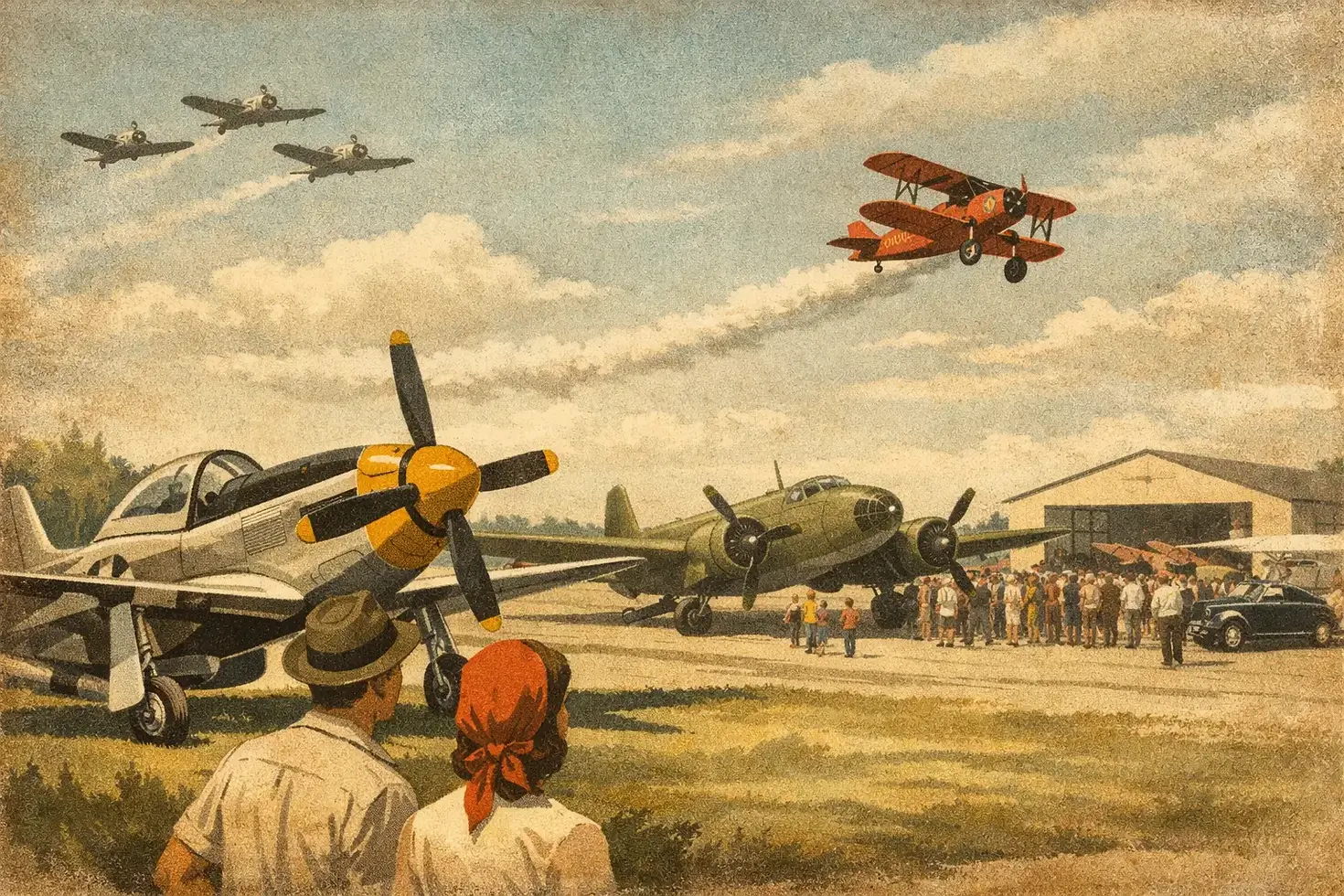
What Makes a Great Vintage Aircraft Display
The first thing people notice is usually the shine - polished aluminum catching the sun, nose art pulling you closer, propellers fixed in place like they could start turning any second. But a truly memorable vintage aircraft display is not just about how an airplane looks parked on the ramp. It is about what that aircraft represents, how it is presented, and the feeling it creates when families, veterans, pilots, and first-time visitors stand a few feet away from living aviation history.
That is what makes these displays so powerful at a community airshow. They bring the past into the present in a way no photo, documentary, or museum label ever fully can. You are not looking at a small image in a book. You are standing in front of the real machine, seeing its size, its lines, its wear, and its craftsmanship. For many people, that moment hits hard. It stirs pride, curiosity, gratitude, and pure excitement all at once.
Why a vintage aircraft display matters
A vintage aircraft display does more than fill space between flying acts. At its best, it becomes the emotional center of an event. These aircraft connect generations. A veteran may see a design that brings back memories of service years. A parent may use the moment to explain history to a child. A young aviation fan may walk away deciding that airplanes are not just interesting - they are part of a story worth following.
There is also something distinctly American about gathering around historic aircraft in a public setting. These airplanes represent engineering grit, military heritage, and a time when aviation was changing the world at high speed. Some aircraft recall sacrifice. Others represent innovation and national confidence. Most do both. When they are displayed with care, they remind a community that aviation history is not distant. It belongs to the people standing right there on the flight line.
That sense of connection matters even more at an event built around civic pride and veteran recognition. In that setting, the display is not simply visual entertainment. It becomes part of a larger tribute.
The difference between parked planes and a real experience
Not every aircraft lineup leaves the same impression. Some displays are technically impressive but emotionally flat. Others feel alive from the moment guests arrive. The difference usually comes down to presentation.
A strong vintage aircraft display gives people context. Visitors want to know what they are looking at, why that aircraft mattered, and what makes it special. They also want to feel welcome approaching it. When the display is organized in a way that encourages movement, conversation, and photos, people stay longer and engage more deeply.
Atmosphere matters, too. Historic aircraft carry weight on their own, but the surrounding event shapes how that weight is felt. Patriotic ceremonies, veteran honors, announcer storytelling, period vehicles, and crowd energy all elevate the display. The aircraft become part of a full experience rather than isolated objects.
There is a trade-off here. Too much spectacle can overpower the history. Too little energy can make remarkable aircraft feel static. The best events strike a balance - respectful, informative, and still thrilling.
What visitors want from a vintage aircraft display
For families, the appeal is immediate. Kids love the scale, the shapes, and the chance to get close to something that looks like it came out of an action movie. Parents appreciate an attraction that feels exciting and educational at the same time. That combination is rare.
For aviation enthusiasts, the details matter. They notice paint schemes, engine types, restoration quality, and historical accuracy. They want to study the aircraft, compare variants, and talk to people who know the difference between legend and fact. If the display gives them something authentic to appreciate, they will remember it.
For veterans and military-supportive attendees, the emotional connection often runs deeper. The aircraft may represent service eras, comrades, family history, or the broader tradition of American airpower. In those moments, the display is not just nostalgic. It is personal.
That is why the best events do not treat all audiences the same. A family may want photo opportunities and room to explore. A history-minded guest may want signage and knowledgeable staff. A veteran may value ceremony and respect above everything else. A great display leaves room for all three.
How presentation shapes the impact
Placement is more important than people realize. When vintage aircraft are positioned where guests can approach safely, photograph them cleanly, and take in their full profile, the visual effect is stronger. Crowd flow matters just as much. If visitors feel cramped or rushed, they are less likely to engage.
Interpretation also changes everything. A simple aircraft card with the model name is better than nothing, but it rarely creates a lasting memory. A short, clear explanation of where the aircraft served, what role it played, and what makes it unique gives the public a reason to care. Add a human story, and the whole display comes alive.
Sound and live narration can help, especially at an airshow. When an announcer connects the aircraft on the ground to the aircraft in the sky, guests begin to understand aviation as a continuum rather than a set of separate attractions. That is where a one-day event can feel much bigger than a typical festival.
Vintage aircraft display and the power of nostalgia
Nostalgia is often treated like a soft emotion, but at an aviation event it is a serious force. It pulls people in, keeps them lingering, and makes them talk about what they saw long after the day ends. A warbird on display is not merely an old machine. It is a visual time capsule with rivets, wings, and a story written in metal.
Still, nostalgia works best when it is grounded in truth. Romanticizing history without acknowledging sacrifice can feel shallow. On the other hand, focusing only on solemnity can strip away the wonder that makes aviation events so compelling. The strongest displays honor both sides - the excitement of the aircraft and the service connected to them.
That balance is especially meaningful in a public event environment where celebration and tribute share the same stage. It allows visitors to feel joy, pride, and respect without contradiction.
Why static displays work so well at live events
Flying demonstrations get the headlines, and rightly so. Nothing replaces the roar of a radial engine or the sight of a historic aircraft banking overhead. But static displays often create the most personal moments of the day.
When an aircraft is on the ground, people can slow down. They can study the cockpit, look at the landing gear, notice the weathering, and imagine the pilots who once trusted that machine. Those close-range moments create a kind of access that flight alone cannot provide.
They also broaden the appeal of the event. Not every guest comes for aerobatics. Some come for history. Some come for veterans programming. Some come because they want a memorable family outing with plenty to see between headline acts. A strong display gives all of them something tangible and worthwhile.
That is part of why events like The Pixel Man Airshow resonate so strongly with local audiences. When vintage aircraft are combined with ceremony, family entertainment, car culture, and community pride, the result feels bigger than a show. It feels like a regional tradition in the making.
What makes people share the experience
People talk about a vintage aircraft display when it gives them more than a photo backdrop. They share it when it feels rare, emotional, and well-staged. A child standing under a wing for the first time. A veteran pausing beside an aircraft that recalls a lifetime of service. A family learning something together between bites from a food truck and the next roar from the runway. Those are the moments that travel.
The visual appeal helps, of course. Vintage aircraft photograph beautifully. But shareable experiences come from meaning, not just looks. When guests feel they were part of something patriotic, local, and unforgettable, they carry that energy with them.
And that is the real standard for success. A great vintage aircraft display should do more than impress the crowd for an afternoon. It should leave people with a stronger connection to aviation, a deeper appreciation for service, and a reason to come back the next time those historic wings roll onto the field.
The best displays remind us that history is not locked behind glass. Sometimes it is parked on the ramp, shining in the Georgia sun, waiting for the next generation to step closer.


Comments