
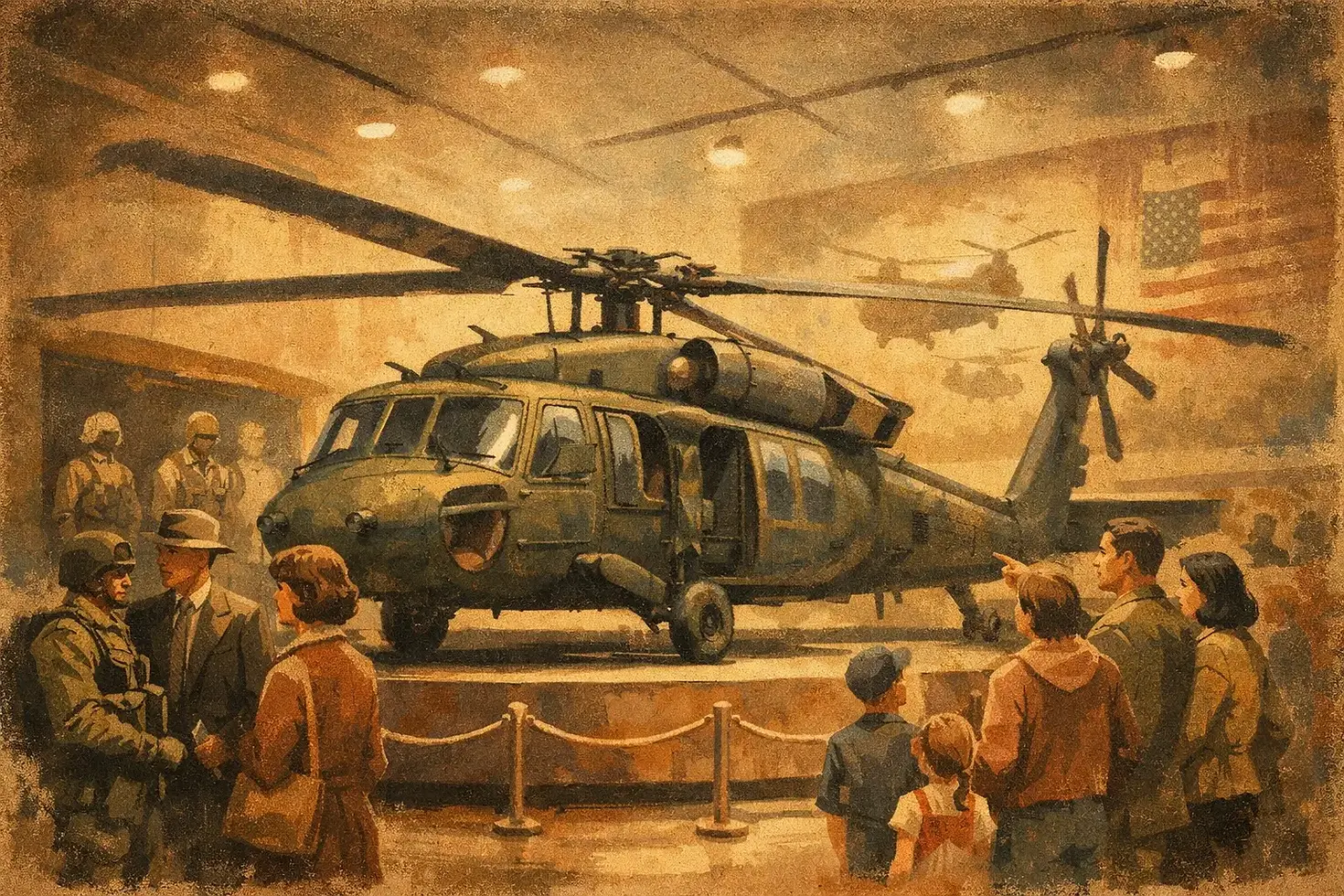
Why the Black Hawk Helicopter Exhibit Stands Out
The moment a Black Hawk comes into view, the whole atmosphere changes. Kids stop mid-sentence. Veterans lean in with recognition. Aviation fans start pointing out details on the fuselage, rotor system, and mission gear. A black hawk helicopter exhibit does not feel like background scenery at an event - it feels like a centerpiece.
That reaction is exactly why this aircraft draws such strong attention at community airshows and military tribute events. It carries weight far beyond its size. The Black Hawk represents speed, utility, rescue, transport, and service under pressure. For families, it is instantly recognizable. For those who served, or who have loved ones who served, it can hit on a much deeper level.
What makes a black hawk helicopter exhibit so compelling
Some aircraft are admired for elegance. Others are known for raw power. The Black Hawk stands out because it combines purpose with presence. It was built to work hard, carry people, and operate in demanding conditions. When the public gets the chance to see one up close, that practical mission becomes part of the experience.
That is what makes a black hawk helicopter exhibit different from simply spotting a helicopter in the sky. Up close, people can appreciate its scale, the design of the cabin, the landing gear, the rotor assembly, and the features that made it such an important military platform. Even attendees who do not know the technical specs can sense that this is a serious aircraft with a serious job.
There is also an emotional factor. Military aircraft exhibits connect people to stories - some personal, some national. A Black Hawk can represent combat support, medevac operations, troop movement, disaster response, and humanitarian missions. The same aircraft can spark excitement in one person and reflection in another. At a well-produced public event, both reactions belong.
More than a photo opportunity
A lot of people first think about the visual appeal, and fair enough - the Black Hawk looks incredible on display. It photographs well, commands space on the ramp, and gives families one of those rare event moments that actually feels worth remembering.
But the best exhibit experience goes beyond pictures. It gives people context. That might come through signage, knowledgeable crew members, veteran conversations, or simple public-facing explanations of how the aircraft was used. When that happens, the exhibit shifts from being cool to being meaningful.
For younger guests, that context can be the start of a lifelong interest in aviation, engineering, or military history. For adults, especially those who appreciate service and sacrifice, it can be a reminder that the machine is only part of the story. The people connected to it are what give it real significance.
Why families are drawn to it
Families do not show up to an event looking for a lecture. They want something exciting, memorable, and easy to enjoy together. A Black Hawk checks every box.
It is visually dramatic without being hard to understand. You do not need an aviation background to be impressed by a helicopter that looks mission-ready from every angle. Children respond to the size and shape immediately. Parents appreciate that it offers something more substantial than a typical fairground attraction. Grandparents and veterans often bring their own memories and perspective, which turns a simple walk-up exhibit into a multigenerational conversation.
That range matters. Not every attraction can hold the attention of three generations at once. A black hawk helicopter exhibit often can.
There is also a practical event advantage. It creates a strong anchor on the grounds. People gather around it, talk about it, and use it as one of the big moments of their day. At a larger airshow or festival, those signature attractions help the entire event feel bigger and more complete.
The veteran connection matters
At patriotic, veteran-centered events, the Black Hawk carries special meaning. It is not just there to impress the crowd. It can serve as a visible tribute to the men and women who flew in it, maintained it, deployed with it, and depended on it.
That is an important distinction. Military aircraft displays should never be treated as props alone. The strongest events present them with energy and respect at the same time. The excitement is real, but so is the history.
For veterans, seeing a Black Hawk on the ground can bring back very different memories depending on their branch, era, and role. Some may want to talk. Others may simply want a quiet look. A thoughtful exhibit leaves room for both. That balance is part of what makes these aircraft such a powerful fit for community events that celebrate service while welcoming the public.
What aviation enthusiasts notice first
Aviation fans usually approach a Black Hawk from a different angle. They notice the aircraft’s profile, mission configuration, rotor setup, and the design choices that make it effective in demanding environments. They may compare variants, ask about service history, or focus on the engineering that supports lift, stability, and payload.
That technical interest adds another layer to the crowd experience. At the same exhibit, one guest is taking a family photo, another is explaining troop transport capability to a child, and another is studying the aircraft with the eye of a pilot or mechanic. That overlap is one reason helicopter exhibits work so well in public settings.
It also shows why presentation matters. If the aircraft is displayed well and interpreted clearly, it can satisfy casual visitors and serious enthusiasts at the same time. If the setup is too thin, one group loses depth. If it is too technical, another group loses accessibility. The best exhibit experience lands in the middle.
A black hawk helicopter exhibit fits the airshow atmosphere
Airshows thrive on motion, sound, and anticipation. Fast jets, warbirds, stunt performers, and ceremonial flyovers all contribute to the energy of the day. A static military aircraft display might seem quieter by comparison, but in reality it plays a major role.
It gives attendees a chance to slow down and connect with aviation on the ground. That matters during a packed event schedule. Not every memorable moment has to happen in the sky. Some of the strongest impressions come from standing a few feet away from an aircraft people usually only see in news footage, documentaries, or distant flyovers.
That is especially true at a community event where the goal is not just spectacle, but connection. At an event like The Pixel Man Airshow, a Black Hawk exhibit would naturally complement the broader experience - thrilling aviation, local pride, family fun, and heartfelt veteran recognition all in one place.
What to expect from the experience
Not every Black Hawk display is the same. Some are purely visual. Others allow closer walkarounds, educational interaction, or conversations with crew and veterans. The value of the experience often depends on the event setup, access level, and the purpose of the display.
That is worth keeping in mind if you are planning your day around seeing one. If you want great photos and a memorable family stop, nearly any well-placed exhibit will deliver. If you are hoping for deeper insight, look for an event that treats the aircraft as part of a larger story rather than a stand-alone attraction.
Either way, the appeal is easy to understand. The Black Hawk brings together action, history, engineering, and emotion in one unmistakable aircraft. Few exhibits can speak to kids, veterans, aviation buffs, and first-time airshow visitors all at once. This one can.
If you get the chance to stand beside one, take your time. Look past the paint, the rotor blades, and the silhouette everyone recognizes. What makes the experience memorable is not only what the aircraft is, but what it represents to the people gathered around it.


Comments